At
last a nuclear debate on
Britain's nuclear weapons
By
Jonathan
Power
TFF Associate
since 1991
Comments to JonatPower@aol.com
November 23, 2005
LONDON - On its submarines Britain
has 48 nuclear warheads, each one eight times as powerful
as the nuclear bomb that obliterated Hiroshima. In other
words, Prime Minister Tony Blair theoretically could
order the almost instant incineration of 384 large cities
around the world. Barely anyone in parliament has
mentioned it, much less debated it in the eight and a
half years Blair has been in office.
But recently, all of a relative
sudden, Blair has promised a discussion sometime "in the
life of the present parliament" because the U.S., the
supplier of the Trident missiles (but not the warheads
which are home-made), has made it clear that it will soon
be taking a decision on replacing its own Tridents and
the UK must decide in tandem what to do with
its.
As Blair slides gently, but not
particularly gracefully, to the end of his term in office
it looks as if the prime minister has decided to kick
this ball down the field for his successor to deal with.
If it is, as is generally believed, the present
Chancellor of the Exchequer, Gordon Brown, it will be
interesting to see how this high principled son of a
Church of Scotland minister deals with this moral
conundrum, particularly since powerful voices within the
opposition Conservative Party seem to be increasingly
both anti the Iraq war and doubtful about the value of an
independent nuclear deterrent. The other principal
opposition party, the Liberal Democrats, has never been
particularly supportive of nuclear weapons.
Perhaps there is a window of
opportunity for nuclear disarmers, particularly since the
British are at the forefront of a European Union
initiative to persuade Iran to forgo nuclear weapons, a
country that lives in a far more dangerous neighborhood
than Britain. After all, the Nuclear Nonproliferation
Treaty, which the West brandishes before Iran, demands
categorically that the old 'nuclear haves' must seriously
engage in nuclear disarmament.
What rational argument could be
presented to parliament in favor of renewing Britain's
nuclear armoury? "History is full of surprises", argued
one participant in a recent Oxford conference on the
subject. That is about as tough minded as the proponents
of nuclear deterrence get these days. But set against
that is the growing consensus that it is now clear in
retrospect that even in the darkest days of the Cold War
there was never a real possibility that the Soviet Union
would launch a nuclear attack against the West. According
to the accounts of a majority of historians, Stalin's
ambitions in Europe were satisfied by the Yalta
settlement made with Churchill and Roosevelt.
General George Lee Butler concluded
after his many years as head of U.S. Strategic Command
(the man responsible for putting into action a
president's order to begin a nuclear attack) that nuclear
weapons "are irrational devices" and argues that the U.S.
itself should disarm. "I have arrived at the conclusion
that it is simply wrong for any mortal to be invested
with the authority to call into question the survival of
the planet."
Professor Robert O'Neill, the
former professor of the History of War at the University
of Oxford, argues against the notion that in a
nuclear-free world a cheater would be king. "No, because
using a few nuclear weapons or threatening to use them
would be of very limited value. Either the bluff would be
called or, if it turns out not to be a bluff and someone
does use them, they would open themselves to unimaginable
retaliation by the whole international community, backed
by intense outrage around the world. For the nation that
did use nuclear weapons it would just be another way of
committing suicide."
Field Marshal Lord Michael Carver,
the former chief of the British Defence Staff, argues,
"The most important thing is to persuade everyone that
the target has got to be total elimination. If you start
peddling solutions which are not quite total elimination
you lose the whole force of the argument."
Yet against this passion brought by
ex military men is ranged popular inertia on one side and
on the other a deeply embedded culture of nuclear
deterrence, not just in the military-industrial complex
but in academia and the media. As former West German
Chancellor Helmut Schmidt (ex nuclear hawk, now a dove)
has analysed it, "there is an enormous body of vested
interests not only through lobbying in Washington and
Moscow but through influence on intellectuals, on people
who write books and articles in newspapers or do features
on television. It's very difficult as a reader or viewer
to distinguish by one's own judgement what is led by
those interests and what is led by rational
conclusion."
But surely it is not beyond the
British parliament to develop a mind of its own on the
subject and start the anti-nuclear ball
rolling.
Copyright © 2005 By
JONATHAN POWER
I can be reached by
phone +44 7785 351172 and e-mail: JonatPower@aol.com
Get
free articles &
updates
Follow this
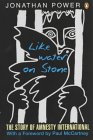
link to read about - and order - Jonathan Power's book
written for the
40th Anniversary of
Amnesty International
"Like
Water on Stone - The Story of Amnesty
International"
Här kan
du läsa om - och köpa - Jonathan Powers bok
på svenska
"Som
Droppen Urholkar
Stenen"


Tell a friend about this article
Send to:
From:
Message and your name
 
|